I’d love to see history classes reworked to include many more women throughout an entire academic year. Since we don’t live in that world yet, here are five reasons why you should consider spending time this Women’s History Month studying African queens in your history class.
1.Africa had numerous female regnants not just regents.
Female regents are incredibly important historically but I have always been curious about women who have reigned themselves. History classes showcase, almost exclusively, male regnants rather than women rulers. Without spending time detailing all of the errors in that way of thinking, there are plenty of women worthy of our time and study.
In Africa, women ruled from the beginning. Historical records survive in various cultures that prove that women ruled. Many records showcase the laws they passed, the structures they built, and the wars they fought.
The early Kandakes of Kush rivaled the rising Egyptian influence. One Egyptian queen was such a force that her male successors almost entirely deleted her existence. The queens of Madagascar had to contend with European colonialism and resettlement.
It is possible to find an African queen to study in whatever period you are currently working on and many of the things these women had to deal with will be relevant to the themes you are working on in your history class.
2. The themes will still fit with the themes of your history course
World history classes love theming. They love charting the changes of civilizations and periods. The issues African queens had to handle are the same as their male counterparts so there is no excuse to skip a female ruler instead of a male one.
A few examples of queens and their themes:
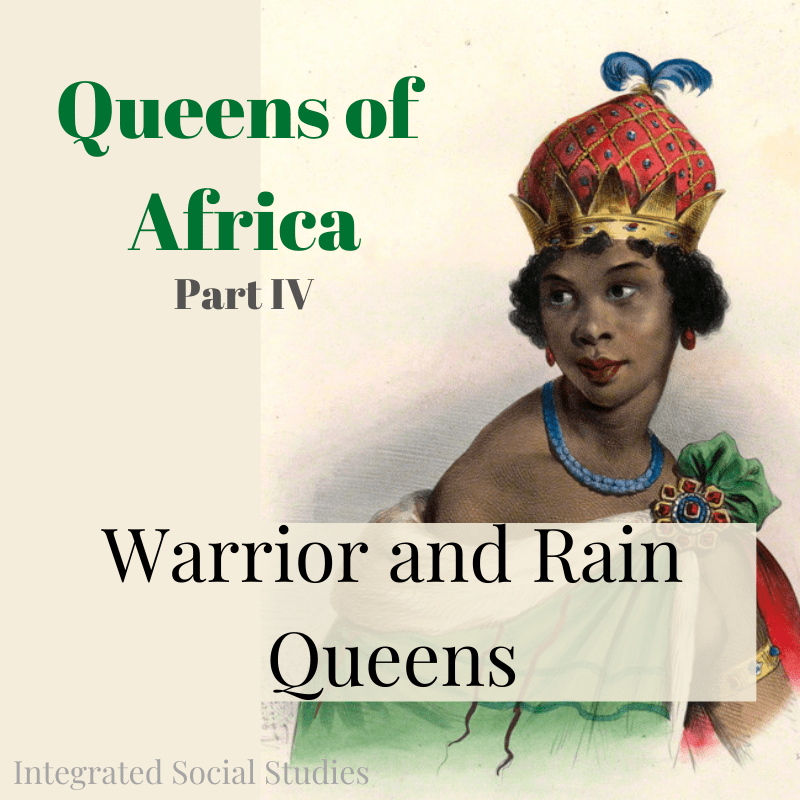
- Queen Nzinga: colonialism, sexism, and slave trade
- Rain Queens: matrilinealism, symbolism
- Eleni of Ethiopia: sexism, machoism, marriage rights
- Cleopatra: imperialism, sexism, decline of civilization
3. History isn’t just a collection of facts
History is written by the victor which is why we’ve been told that women’s contributions to history are minor or insignifant. Too often, however, when we look closer and analyze the information, we see that women were purposefully deleted or their contribution in some way attributed to a man.
Cleopatra was remade to be a promiscuous, uninspiring leader. Even while alive, Cleopatra has been described as man obessed. We focus on her lovers more than we do on her civilization. Friendly contemporary accounts of her exist that remind us that she was highly educated, spoken many languages, and managed to keep her civilization intact during her lifetime.
We can argue about the decline of the Egyptian civilization but that road was already well traveled by the time Cleopatra took the throne and she managed the road well.
Queen Ranavalona I of Madagascar did nothing different from previous male regnants yet she’s recorded in historical accounts as cruel or evil. Her reign is portrayed as a reign of terror while accounts of male regnants are portrayed as stable and steady despite carrying out the same amount of violence against rivals.
History is a collection of opinions at the very least. Let’s begin to illustrate a whole history rather than selections.
4. Inspire students with lessons on strong, black (sometimes brown) female leadership
What I love about the stories of Africas queens, is that the stories have had to survive a lot. Racism in history, sexism in history and yet their stories still exist. That is inspiring.
Black (and sometimes brown) women ruled amazing civilizations and cultures. It’s time to include their stories and inspire your students. Yes, even the white students. They get inspired by these stories too and need to hear them.
We’ve all contributed to the exclusion of African history long enough. Study it more and do so with the stories of some African queens.
5. Buy my five-part African Queens series for Women’s History Month THIS year but use it for Black History Month next year.
Yes, I know, many people think it is Black American History Month but as a former world history teacher, I preferred to focus on black history as a whole rather than just one, modern culture.
My five-part Queens of Africa resources in my TPT store are versatile, are short reads so they don’t take up a lot of time, and can be used during their correct period, during Black History Month, or during Women’s History Month.
Happy Women’s History Month!
Check out my five part series to get started.




If you liked this then maybe you’d also like:



 Integrated Social Studies